Dentures are great to restore the smile, but sometimes, the improper gum changes and the fitting concerns become a major problem over time.
Snap-on dentures are a replacement option, which seem more stable than other dentures. They also offer natural-looking teeth, and a confidence that comes with not worrying about embarrassing slippage. They’re great options for all of your needs.
Denture Types
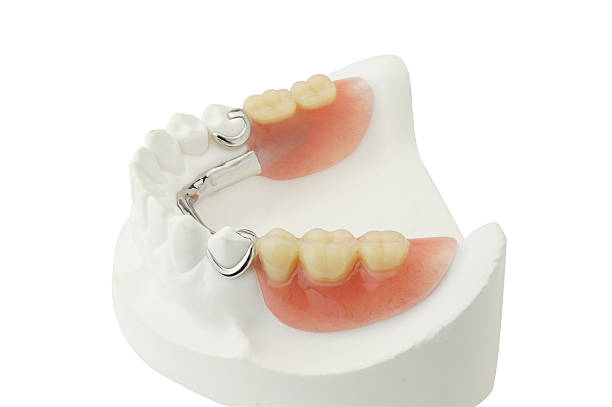
There are many different types besides the snap-on dentures. There are also implant-supported dentures, or overdenture items, which are made to rely on the teeth that remain.
Below are the three types:
- Immediate dentures which is where the remaining teeth are moved, offering a temporary denture while the gums heal and adjust
- Conventional dentures, which fit over the gums as they heal. They are held in place directly by gums
- Overdentures, which attach to the teeth that remain, or implants within the gums. To fit these, the dentist will insert these posts into your jawbone, and the denture will snap onto these extensions, as they protrude from the gums.
How they’re Fitted
The procedure used to fit these snap on dentures takes around six months to fully complete.
To begin, the implants are put to the jawbone and they’re basically small metal cylinders with screws on them.
The bone will naturally grow around each of these implants, to the point where they are embedded. Many times, patients will wear immediate dentures.
Then there is the second surgery, where a locator is attached to the implants. They protrude from these gums, serving as a base for the dentures. Then, after two weeks of healing, the denture is attached to these. Some of these locators will allow the patient to put the dentures in, snapping on and off, and others may permanently fix these replacement teeth, putting them in the form of implants.
There are sometimes singular procedures that’ll encompass the placement of the implant, and the locators. Not sure of what you want? Well, your dentist can look for options, seeing what’s available to you.
The Pros and Cons of these Snap-on Dentures
There are some advantages and drawbacks of both of these.
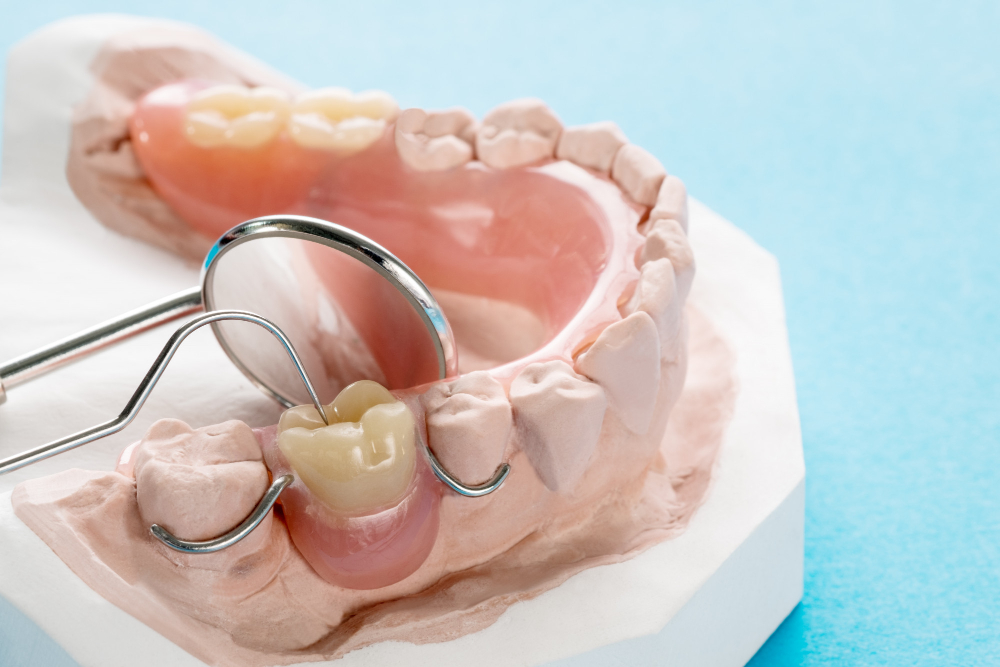
For some patients, especially if they struggle with speaking and eating through conventional dentures, they’ve found beauty in using the implant ones, as they’re an alternative that’s far more stable, and far less likely to move off them. The dentures also may be effective as well at also disguising the gum tissue that’s lost.
The insertion of these implants near the gums also benefits the bone mass, whereas those that wear conventional dentures may have some weakening of the jawbone, and even loss of such.
However, the biggest downside is the costs. The costs for these may be way too high for some people and that is the biggest drawback. Also, if you have had surgeries before, it may be a struggle to get the surgery for the implants. Sometimes, people aren’t qualified as well due to the state of their gums.
Even with the costs through, they may be better, especially since they’re more cost-effective in the long haul, especially since they’re implanted.
The lifespans of these also may be a factor too. They don’t become ill fitting and loose like conventional dentures. The impact usually lasts ten years or more. Make sure that if you do get them, try to make sure that you also maintain them. The way to keep a denture lasting a lifetime is to properly ensure that they’re taken care of, and also to follow the instructions your dentist gives to use them too.
 Mouth Health