Thyroglossal Duct Cysts 

If you have a kid that complains that there’s a lump in their throat, it’s advisable to visit a doctor immediately.

This may be caused by what’s called a thyroglossal duct cyst, and this does happen in some young kids.

This typically happens after upper respiratory infections. So if a child gets sick, this also might be a sign that it’s there. 

What is It? 

This is something that develops in some cases before a kid is born. During the 9th week when a child is in the mother’s womb, the thyroid gland is formed and finished up.  Sometimes, your thyroglossal duct may be inwardly curved. This is located usually near your tongue base, all the way out towards the middle-front part of your neck.  As the ASPA says, this is something that’s known as a thyroglossal duct remnant, and usually, this is due to the fact that a part of this duct is still there when this dissolves. The tract that’s left over creates a sac that’s fluid filled, and this is known as a cyst.  The most notable location is usually the bone that’s within the neck, and that’s called the hyoid. 
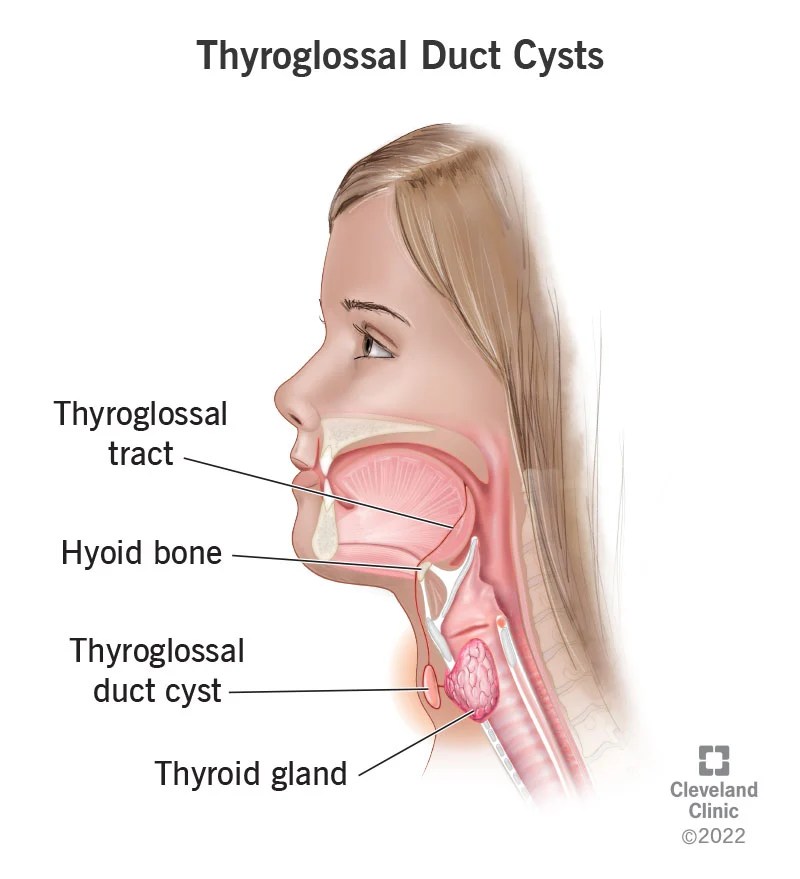
As many look at the details of this, this is usually responsible for 70% of the masses that children have in their necks. This is usually seen in kids that are under the age of five or so. However, there are those that have had this happen when they were adults, and over 20 years old. These masses can possibly be cancerous if you’re not careful.

The Signs and Symptoms 

The most common symptom is a cyst that shows up. Usually this is round and soft.  Sometimes, it might be tender, a bit red, and there might be some swelling near where the lump is due to infection. Difficulty swallowing and sometimes breathing is also a common symptom of this. if a person sticks their tongue out or swallows, the mass will then move in an upward fashion. 

Treatment and Diagnosis 

If you find that you have this, you should see a doctor. Specifically, an ear, nose or a throat specialist that can treat this. They’ll assess the child’s thyroid to find out what’s going on, in order to confirm whether there is something there. this is also done with a computed tomography scan. 

Sometimes, they might also decide to utilize a blood test if they want to check whether the thyroid gland is functioning. If they’re still assessing it; they might also take a needle to the cyst itself to get some of the cells. That way, they can look at this to figure out what’s going on.
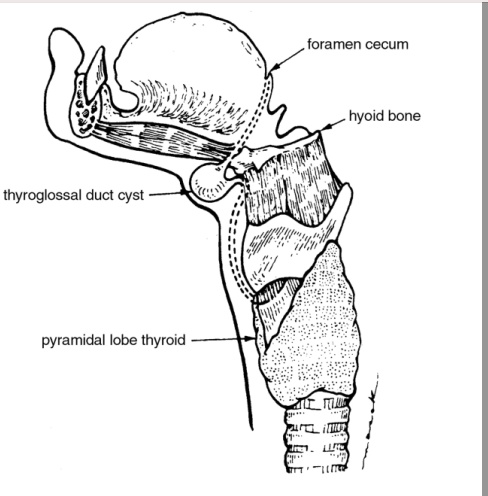
Typically, if there is an infection, they use antibiotics in order to control it.  Sometimes, if its in a problematic area or it is not responding to antibiotics, you might need to get surgery to remove this. They use something called the Sistrunk procedure. This is where a surgeon creates incisions over where the cyst is in order to remove this.  they might also take out a portion of your hyoid in some cases in order to reduce the chances that conditions might happen there. Typically, a child will have to stay one night inside the hospital to heal.

Overall, it’s a pretty straightforward procedure and doctors will assess it. but if you do realize that there is a lump there on the neck of your child, it’s advisable to get that examined, and they’ll advise on the next couple of steps for your treatment process as well, so you can get the help you need.

A Brief history of Dentistry 

Dentistry has come a long way, and here, we’ll go over some of the different historical practices that were used, and what was done to take modern dentistry to where it is today.

Ancient Techniques 

Density is actually a very old medical practice, with it dating all the way back to 79000 BC, and seen in the Indus valley.   However, the descriptions of tooth decay were first seen in Sumerian texts. However, these were wrong, and they talked about tooth worms that caused tooth decay. Obviously, that isn’t the case.

However, Aristotle and Hippocrates did write about the treatment of decaying teeth. Back then they used fine-tooth combs, in order to ensure that their teeth were cleaned. These were made from the hair of animals. They also used toothpaste, but tit was a very abrasive product. 

The Middle Ages 

The middle ages saw some dentistry as well, except these were in the form of magic and myths, which have since been disproven.

Back then people thought that teeth were magical items.   They were also used to protect a child from fairies. 

The Europeans did believe that witches would curse people with their teeth, so they would dispose of them either through swallowing, burying, or even burning their teeth. Some fed them to rodents, or were even just thrown out. 

Tooth decay was again thought to be caused by a tooth worm, which they thought burrowed into a tooth like it did with wood.  Some of the remedies for this were interesting.   While some were more normal like burning candles made of eryngo seed and sheep suet near the teeth, others were quite interesting, such as kissing a donkey, as purported by Germanic legend. 

Some even said they should not clean their ears, as the practitioners did advise against cleaning up the ears to prevent this. obviously there was a lot of false information which would not be disproven for another few centuries. 

The Beginning of Modern Dentistry 

Remember the idea of tooth worms? Well that was thought to be a thing until the 1700s! However, in 1530 there was a little medicinal book that talked about the infirmities of the teeth, which was devoted to dentistry.

The first dentists were seen in the 1700s, with Pierre Fauchard in 1723, being the father of modern dental practices.   He wrote a whole comprehensive means for treating and caring for teeth. He was also the first to introduce fillings, and dental prosthesis. He also figured out that sugar and acids were what caused dental decay.

The first dental college was founded about a century later in 1840, and this was the Baltimore college of Dental Surgery, which was something that seemed to be popular back then.   The ADA was formed in the 1860s, 20 years before the first dental practice was founded in Alabama. 

Then of course, the first dental institution and university was the Harvard University Dental School, which they founded back in 1867. 

Colgate was the first to make modern toothpaste, which was made in 1873, and toothbrushes were founded a few years after that. 

The first x-ray was used in 1896, and more systems for crooked teeth developed here. Obviously, when we look at where it’s come today, we have a lot more to work with.

Various cleaning devices that get deep like the cavitron are popular. There’s also various technology to see directly any malicious tissues, such as cancers and growths.   With the evolution of dental care, we see how far it’s come, and how through this constant evolution, we are able to care for more people than ever before. 

Helping children Floss

One thing that a lot of parents need to teach their child is proper oral care. While brushing twice daily along with flossing come together to reduce tooth decay and gum disease, the one that a lot of children have trouble with is flossing.  You can learn how to help children clean between the teeth with their floss, encouraging them to keep up the habit for the rest of their life. 

When to Start 

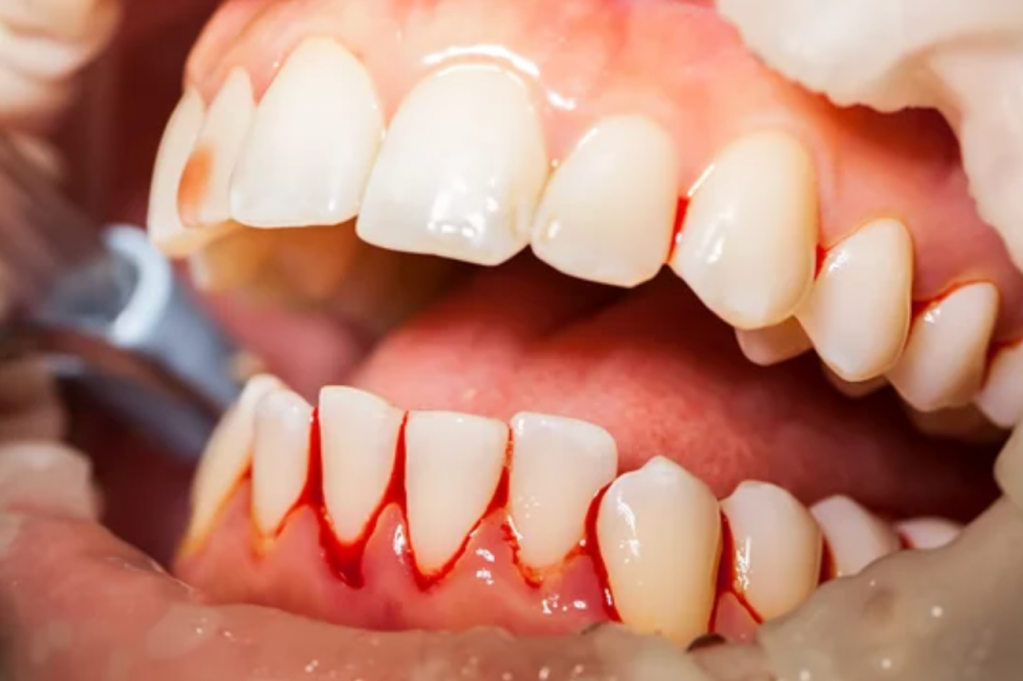
Children need to start flossing when enough of the teeth that they have start growing next to one another. Bacteria settle in between the teeth, which leads to tooth decay, and gums which are inflamed. Parents usually have to floss the kid’s teeth usually initially. It’s vital to also be gentle when you do this, as this can sometimes be a bit sore afterwards, and crate gums that are bleeding. Keep it gentle, so that you can teach children the vital nature of this habit. 

Getting Children to Floss Better 

If you’re dealing with a child who is against flossing, or hesitant on doing this, you’re not alone. When you clean between the teeth, this is challenging, but there are a few ways to make it fun for them. 

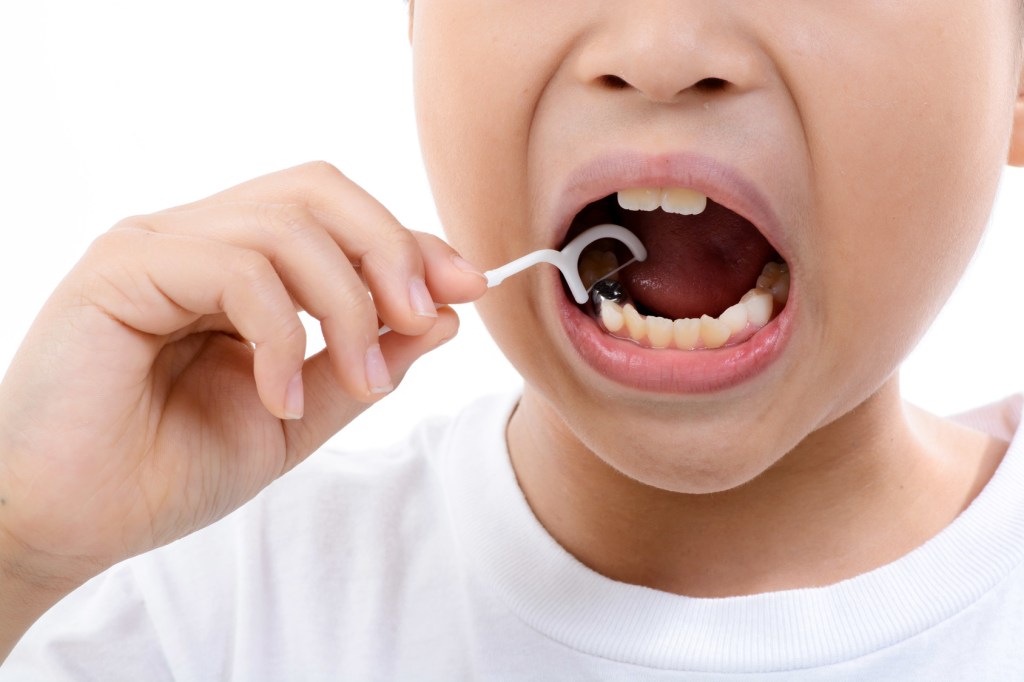
Close up Young asian boy useing toothpick to clean his teeth on white background.

Some of these include: 

  • Demonstrating the way flossing works 
  • Rewarding correct flossing 
  • Singing different songs 
  • Letting children pick out the products they need to use 

You can show them how flossing removes this debris pretty easily. First, you want to eat snacks including fruit, leafy greens, and the like, something that usually gets stuck between a person’s teeth. You then demonstrate the correct technique for flossing, so you can provide children with a visual on just how this works. Then, you want to make this a habit, by having them put together a calendar that demonstrates their oral care. Whenever they do something correct, they get a sticker. Then, as  they accumulate the stickers, they can get rewards for it. 

Sometimes, singing works too, as it can help get children engaged and excited for flossing. 

Flossing for Kids 

If you’re wondering the best way to floss a child’s teeth, you’re not alone. 

You can actually do this in just four simple steps, provided that the child has enough teeth to make this a reality. In fact, once the floss is there, you can then continue, and from there, build the best means for you to get the results you want. 

  • First, you want to get about 18 or more inches of floss, but not a ton of it. 
  • Wind a bit of floss around the index finger and the thumb, at every single end until there’s a small section of floss a person can use between their fingers. Then, you want to slide this between the teeth of a child.
  • Angle this so that it creates  a C shape that curves around the teeth, sliding the floss along the sides of your teeth, and then underneath the gum line 
  • Using a fresh and new floss section, repeat this each time so that the biofilm and the food doesn’t get put back in there, because that can happen 

If this is hard for them to do, or if it’s not comfortable, the best way for a child to manage this at this point is either water flossers or interdental brushes that clean up the teeth, preventing further discomfort from happening.

With all of this, you as a parent will be able to ensure that the child gets proper care, and they’ll be able to grow with this, building better health habits. 

What Dental Bonding is 

Accidents happen, and there are tons of ways a tooth may get chipped, and a few ways to repair it. One of them is tooth bonding, or enamel bonding. It’s cost-effective, and good for minor problems that happen with broken teeth.If you have cracked, chipped, decayed, or problems with teeth coloring, bonding might be the best way to get your confidence, and a winning smile back.

What it’s used for 

Bonding is where you get some composite resin on the tooth’s surface to fix it. It’s simple, not expensive, and a cosmetic procedure that’s done in one visit. With lots of dental issues that bonding can fix, it’s good for discolored or chipped teeth.

It also may choose to close the larger spaces between one’s teeth, changing the shape and making them look longer. They are also used in metallic or amalgam fillings to protect the exposed rooted part with gums that are receded. 

How it’s Done

Luckily, bonding is a very simple procedure that requires just one appointment. 

A composite resin made from plastic is placed on the tooth. It’s perfect to mold there, so if you’ve got a newer tooth, it will fit with the smile. 

Here’s the steps that go with the dental bonding procedure. 

  1. First the dentist will clean the tooth in order to create the best bonding surface possible. 
  2. They apply the resin and then shape that bonding material. 
  3. The bonding is then dried with UV light, and shaping takes place 
  4. It’s polished for a natural look, and then they floss it to make sure that it’s smooth. 
  5. It usually takes thirty minutes to an hour to fix this. but if there’s multiple teeth, it takes multiple visits. Most tooth bonding doesn’t require any anesthesia, so you’ll return to daily activities right after the appointment. 

Risks to Bonding  

There are a few risks to this. The main downside is that it will never be as strong naturally as natural teeth, so there is a chance that these can break off, or chip completely. If you’re going in for tooth bonding procedures, it may be time to kick those habits, including biting fingernails, chewing on pen caps, and ice, as they will impact the resin.

Care for bonded Teeth 

How long your bonding lasts depends on what you need done, and habits orally, so it’s vital to give the teeth that are bonded with as much care and attention as the natural teeth might.

Bonding material is very prone to staining, so make sure that you watch how much you consume coffee, tea, wine, and cigarettes. 

Avoid these foods for up to 48 hours after any procedure. If you do have some sharp edges on the teeth, or they feel weird when you bite down. if they fall off or completely chip, contact the dentist immediately. 

How long they last can be anywhere from three to ten years before needing to be repaired or replaced. If you brush your teeth twice daily and interdental flossing, it does extend that dental bonding effectiveness.

These regular visits also keep the mouth healthy, ensuring that the dental bonding is functional. 

Try to avoid eating hard, chewy candies, and don’t pick at the bonding.   When playing sports, protect your teeth with a mouth guard. If you do grind your teeth at night, try to prevent the grinding and damage with a night guard. 

Tooth bonding is pretty affordable, and usually only requires a single appointment. It’s pretty cheap and is usually under a grand. It’s great to get the confidence that you need. 

The Science Behind Oral health and Chewing Gum 

Oral health treatments come in a variety of different means. Brushing your teeth, flossing, the works. But, one treatment that’s recently been considered is chewing gum.   However, there are a few things you need to know about this, which we’ll go over here. 

The power of Sugar-Free 

Sugar-free gum is great for a variety of reasons, especially in reducing plaque and cavities. A lot of times, cavities and plaque are a result of the bacteria that’s on the enamel, not washed away. 

When you chew gum, you are stimulating saliva production.   This washes away bacteria, and will help to ensure that you aren’t having to worry about the bacteria being there. reduction of plaque and cavities means a reduction as well of problems in the mouth, so it’s worth looking at. 

How much Can Gum Do 

Gum does a lot.   While we know it for treatment of cavities, it also has benefits in the treatment of tooth sensitivity. Some note that there is far less sensitivity when a person chews gum than when it does not.   

The other thing that chewing gum does is that it stimulates saliva production in order to combat bad breath.   While gum already helps with the bad breath problem because it tastes good, after all of the flavor is gone, it helps with this. That is because the bacteria that you do have in your mouth is washed away and from there, the bacteria that causes problems are no more. 

What’s the research 

The research focuses on the effectiveness of gum and how it helps. 

The thing to remember is that gum is a temporary solution. A lot will consume it because they don’t have a brush on them, or don’t have access to brush and floss their teeth.   

It cannot replace brushing and flossing. This is because a toothbrush gets below the surface, and allows for a deeper cleaning.   Flossing gets in between the teeth, arguably just as good, if not better, than brushing the teeth. 

Gum is more superficial. While it works on surfaces, in order to get a deeper cleaning, you need to brush and also go to the doctor. 

It also does not replace seeing a dentist. Dentists have machines that give deeper cleanings to your teeth, resulting in happier, healthier measures. So while yes, chewing gum is a great way to help stimulate oral care and production, it will not replace the brushing and flossing that you’re already doing. 

How should I use This Then? 

The best way to use gum is, after a meal, you get a piece of sugar-free gum out and begin to chew it. the xylitol, along with other components, helps with cleaning off the surfaces of the teeth, and helps as well to ensure that you have happy, healthier mouths. 

If you want to chew it after you’re done eating that’s fine.   It doesn’t have to be every time, but the more frequently you do it, the better your breath will be. 

It also works well for prevention of sensitivity and plaque. If you wake up one morning and your breath is vile, and you don’t have time to brush, just pop some gum in.

Overall, chewing gum has a lot of great benefits to it, and there is a reason why people enjoy it. However, remember that it can only go so far, because you’re not going to really be able to get a ton of benefits from it in the long-term, but does offer short-term plaque prevention solutions that are worth using whenever possible too. 

The science of Plaque and Tartar 

Plaque and tartar are the two things that you hear your dentist talk about with you all the time. It’s probably the one thing that they’re always getting on to you about. “you have a lot of plaque” “there’s a lot of tartar buildup? But have you ever wondered why they care about this? Well, you’re in luck because here, we’ll look at the science of plaque and tartar, to help you better understand just what’s going on. 

What plaque Is 

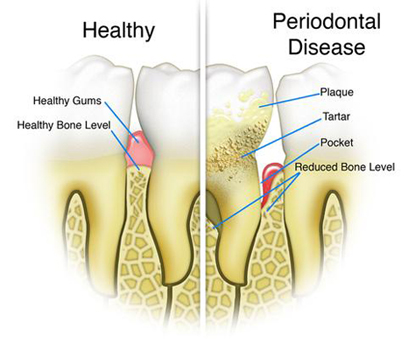
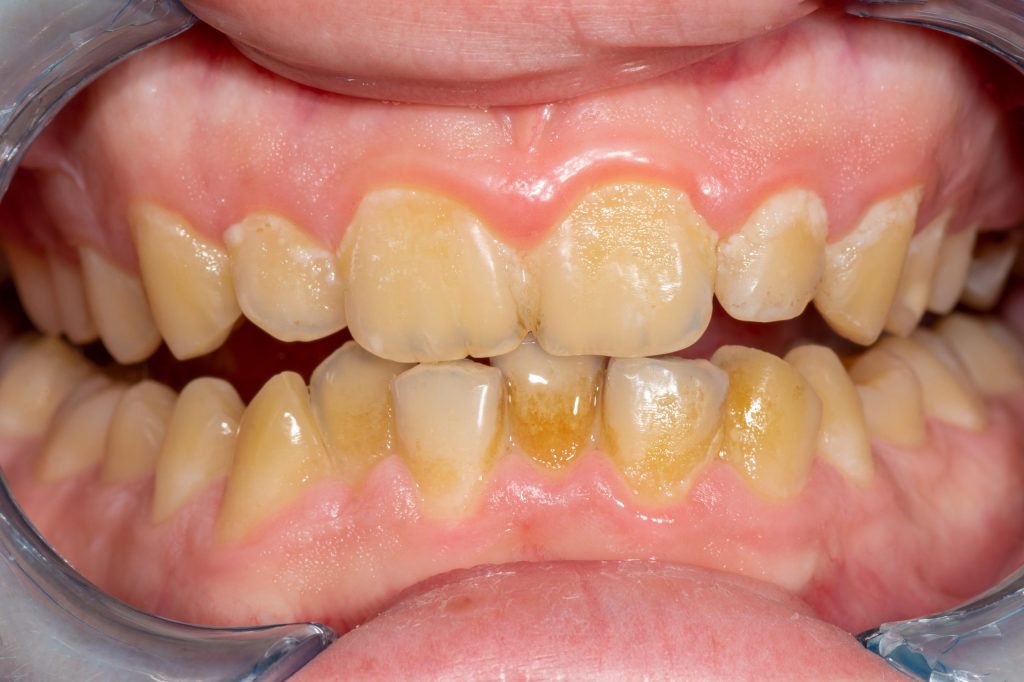
Plaque is basically what bacteria creates after they eat some of the food and enamel off your tooth. It’s a biofilm that covers the area. The problem with this is that it starts to harden, and then bacteria will feed off this, creating tooth decay. When it gets all the way to the root, it causes gingivitis, and periodontitis, which are both not very fun diseases. 

It is a huge concern because over time, it will start to break down, eventually getting so bad that it can cause tooth loss. Again, never fun, and you should always try not to have this happen. 

The formation Process 

The formation process begins with your mouth’s biome.   The mouth has a ton of bacteria, some good, some bad.   While the good is needed, the bad causes problems. 

The bad, feeds off sugars and starches that you eat.   When they nibble on this, it then causes the biofilm to form.   This then becomes plaque.  When you wash it off, you’re fine, but what if you don’t.

Then it hardens even further, creating what’s called tartar. Tartar cannot be removed without the help of a dentist, so don’t even try to do it yourself. 

When left on, it then causes tooth decay and a breakdown as well. 

The prevention of tooth decay 

Tooth decay prevention requires you to take care of your teeth, to remove this plaque before it gets worse. This of course, may be brushing your teeth twice a day, really getting all of the various areas. It also may be flossing, to get in between those problematic teeth areas. 

Now, brushing and flossing only goes so far. It’s needed, it’s important, but it isn’t perfect.   In some cases, it might cause you to have to go and see someone else, a dentist perhaps. In that case, then you’ll need to get a professional cleaning to get rid of the bad stuff.

But while seeing a dentist is great, you also need to be proactive about what you do.   try to as well have some diet and lifestyle choices, ones that will help to improve the oral health and reduce plaque buildup. It may take time, but removing the sugars and starches, replacing them with healthy, whole foods that will improve the enamel, will most definitely be the better solution for you. 

If you’re having trouble with what foods to eat, having dairy, leafy greens, and non-acidic foods is a good place to begin. you can have sugars and starches, but try to have some water after that. Also, don’t try to have them often.

And there you have it, everything that you need to know about dental health, and how to prevent the ongoing growth of plaque. When you control your plaque, you control your oral health, and by doing so, you’ll be able to, with this, create a better, and more rewarding experience for your oral health needs. 

Controlling this will help to make your own experience even better, and by doing so, you can create a better mouth for yourself and your future. 

Women’s Hormones and Oral Health 

Women’s hormones affect a lot of things. Did you know that it also includes oral health? Yes, estrogen, progesterone, and even menopause affect your oral health, which is why here, we’ll talk about what can happen if you’re not careful. 

Puberty, Progesterone, and Gums 

Young girls may not notice the changes to their oral health, but puberty causes many physical changes. The biggest ones are estrogen and progesterone. This creates gum sensitivity and the possibility of germs creating problems. 

If not taken care of, such as through regular checkups, brushing twice daily and flossing once a day, it does lead to infection, redness of gums, bleeding and swelling, and may cause gingivitis. 

Menstruation and Oral health 

Every month women who are of childbearing age who aren’t pregnant deal with menstruation. We think about the cramps, bloating, and emotional effects. But there are hormonal changes throughout the menstrual cycle that create oral health changes. 

Sometimes canker sores, salivary glands being swollen, red gums that are swollen and bleeding gums all can happen right before a woman can get their period. Menstruation gingivitis, while rare, does happen right before one gets their period, and will clear up after. While temporary, this can lead to long-term problems if you’re not careful. 

Pregnancy and Gingivitis 

Pregnancy causes a lot of changes to a woman’s body. The biggest one is the immune response.   Sometimes, women’s immune systems go into overdrive, and can lead to sensitivity in many areas, including the gums. Pregnancy gingivitis is quite common, especially during the second and third trimester of pregnancy.   Getting regular cleaning and checking with your dentist on the same level as you would with the obstetrician and gynecologist during this phase of life is important.

Sometimes, gestational diabetes happens too, which can also negatively affect the gums and oral health

Menopause 

Menopause is when a woman stops producing her own estrogen. This is also when a woman stops getting her period as well. it can create changes in a woman’s oral health, especially due to the sudden drop of hormones. A changed taste, burning in he mouth, sensitivity to hot and cold, and even less saliva tends to happen to women during menopause. Definitely talk to your dentist if you have issues with your oral health, especially after this stage in life. 

Hormonal Birth Control Concerns 

Finally, there’s hormonal birth control. They do come with side effects, sometimes quite excessive. In some cases, it does lead to dry mouth for some female patients. The best thing to do is to talk to your dentist and if they notice this, get the help you need right away.

Take Charge of your Oral Health Today! 

As a woman, it’s vital to start taking care of your oral health the second that you realize there is a problem. Even when reading this, you should start to maintain your oral health.

Make sure to brush twice daily, but use a toothpaste containing fluoride.   Rinse and floss once a day, preferably with an alcohol-free mouthwash so it doesn’t dry out the mouth even more.

Try to go to the dentist twice a year for cleanings and exams. That way, if there is something going wrong, they can take care of it right then and there. 

Make sure you’re eating a diet that’s well-balanced, with plenty of fruits and vegetables.   Make sure you’re also eating foods that aren’t too sugary or starchy as well, as that will feed the bacteria. Try to drink as much water as you can too, in order to flush out that harmful bacteria that appears. 

Why Water is The Best Cavity Fighter 

Water plays a major role in your oral hygiene. In fact, it’s one of the best ways to keep cavities out. why? It’s so simple! In this, we’ll   go over how water can wash away plaque, and the importance of how it prevents acidic damage. 

But, not all water is equal, which we’ll go over to, and show the differences in which different water can offer to your experience, and why it’s important to be mindful of the quality of water, including water it matters. 

How Water Wipes away Plaque 

Water is one of the easiest ways to get rid of plaque, because it can rinse away a ton for this.

When you drink water, it washes away the brunt of these food particles, so that bacteria can’t consume them, reducing the buildup on teeth.  Hydrating your mouth also contributes to saliva production, and also will help with reducing the plaque that would form otherwise. 

Water also naturally neutralizes acid.   Acids that are produced by bacteria in the mouth can be diluted with the use of water, protecting the enamel from erosion that is caused by plaque.   All of these things, combined together, will make it the best way to reduce the cavities in your mouth. 

Tap, filtered, and alkaline Water and mental Health 

The type of water that you drink plays a big part in it. 

Tap water is actually the best out of these three. Why? Because you’re getting fluoride, which will strengthen your enamel and also prevent cavities. It’s probably your best one. 

Some filtered water may retain the fluoride, depending on the water filter. If your water is nasty to drink otherwise, or you prefer the taste of filtered water, you can. 

Alkaline water tends to be at the lowest because while there are some benefits in terms of neutralizing the acidity of odors, there’s not enough research to state otherwise on these potential benefits. More is needed to confirm the overall impact on teeth before you can decide one way or another. 

The big thing to be mindful of, is that some places have bad tap water, especially with impurities.   Keep this in mind, and be mindful of your water consumption. 

How Dehydration connects to Sensitivity and Bad Breath 

Dehydration causes a lot of problems with your oral health.   While dehydration is bad for the body overall, oral health is especially egregious.   By significantly reducing the saliva production, you create a dry mouth environment. This increases the presence of bacteria, since they’re unable to be washed away. the bacteria will stay, increasing tooth decay, periodontitis, and also bad breath because the mouth is dry. 

Saliva is important. It helps to neutralize the acids and also wash away the food particles, so you need to have water.   A lack of saliva also makes an environment where bacteria can thrive. 

It also can negatively impact the gums, drying them out and a breeding ground for bacteria. While water is important for other parts of the body, it’s especially integral for dental health. 

Make sure you have enough water.   Eight eight-ounce glasses a day works wonders on your oral health, and is probably the simplest way to do this. If you notice that you’re having trouble getting this, get a big water bottle and start to record your water intake. It plays a critical role in your overall health, and proves some marked effects. 

Take care of your teeth by using water. Consume as much as you can to have long-term oral health success, especially when it comes to tooth decay. 

Natural Remedies to Prevent Cavities 

There are a lot of ways to prevent cavities. Eating well, drinking water, and the like.  Natural ways to prevent tooth decay is important, sometimes almost more important than the natural ways. 

Here are some natural remedies that will allow you to prevent those cavities. We’re going to explore food that you should eat, various herbal remedies worth looking at, and finally, actions you can take in order to prevent cavities. 

Foods for Cavity Prevention 

The first is foods that you have to prevent cavities. Now, because of this, we’re not saying they will automatically prevent this, but they strengthen your enamel in order to prevent further cavities in the future.   

The first is dairy. This is because of the calcium, which is used to strengthen bones and teeth. Very good for strengthening your enamel, and overall preventing tooth decay.

Leafy greens are another. Leafy greens contain B and D vitamins, which are good for prevention of tooth decay.

Nuts are a third one.  Nuts offer a lot of unique vitamins, proteins, and the like. It keeps you full too, so you’re not over here trying to eat something bad. Sugary foods are definitely something to avoid, since in a lot of cases, it can be something that will cause more decay.

Many people eat too much sugar. Sugar is the natural killer, and it’s why a lot of people are having tooth issues. This is because of their teeth, and not taking care of them.   but, when you eat right, you’ll be able to prevent this. 

Herbal remedies. 

Herbal remedies are another. The basis for this is that they do naturally fight bacteria. They are anti-inflammatory, and antimicrobial, which is used to kill the bad bacteria, writing them in its place. These remedies are a little bit divided if they work, but they are something which, for many people, is a good way to fight cavities. 

Oil pulling 

Finally, there is oil pulling. This is where you take oil and swish it around in your mouth. While it might seem silly, this actually helps with tooth decay because it pulls all of the germs away from your mouth. When everything’s pulled it then gets rid of a lot of the decay.  You spit it out, and the oil then gets rid of those germs. 

Baking soda as well is used with this. Baking soda is also good for a lot of tooth decay preventative measures. This is because baking soda is abrasive, and is good for cleaning even the worst stains. Bear in mind that if you do use this, try not to overuse the item, because the abrasiveness will wear away the enamel that’s there. 

Overall, this is not the only way to prevent tooth decay, but it is a measure you can take, in order to improve your oral health. 

Complement, not Replace 

All of these natural remedies are complements for your oral health care routine. No, do not replace your oral care routine with this. 

You want to make sure that you still go to the dentist for check ups multiple times a year, and also brush your teeth every day, and floss your teeth as well. a healthy diet and regular oil pulling, however, can work to keep your teeth looking nice and shiny. Knowing this, you’ll be able to have the best oral health that you can, and in turn, make sure that you’ve got a bright smile that will last a long time! 

How to Fix Bad Breath and Dry Mouth 

Bad breath is something that we all have every single morning.

However, some of us have really bad breath, and it can be a bit embarrassing, and bring a self-conscious feeling to this.  The best way to prevent this is by practicing good dental health.

However, dry mouth also is the cause of bad breath, and that has so little to do with how you take care of your teeth.

However, there are ways to fix it, which is what we’re going to talk about here. 

The Cause of Dry Mouth 

The cause of this is a variety of reasons.  Vomiting, the flu, or dehydration are a lot of causes but those are temporary.

Sometimes, if you have diabetes or another medical condition, you may experience dry mouth.  It’s also a side effect that some medications have, including decongestants, antihistamines, pain meds, and muscle relaxants.  If you have a prescription for anxiety and high blood pressure medications, you might also suffer from dry mouth.

Finally, if you get chemotherapy, you might also deal with dry mouth. 

Bad Breath Reasons 

You may get bad breath sometimes from dry mouth, but that’s not always the case. 

How does it happen though? it’s actually not from the medication, but it’s actually chemicals present within the medicine.  They directly inhibit the production of saliva from the salivary glands. Saliva is responsible for hydration, getting rid of food particles from gums and teeth, and fighting off tooth decay.  Without the use of saliva, you’ll have more bacteria, dry mouth and oral parts of your mouth, and this creates bad breath.

Diagnosis of Dry Mouth 

You may have some problems in the mouth responsible for the production of dry mouth.

Woman using breath freshener

If the reason for dry mouth is your oral health, then periodontal disease, cavities, and the like might be the problem. 

If you’re taking medication that causes this, however, you should talk to a specialist, or even a physician, in order to take care of the issue at hand. 

Treatments and Prevention 

There are a few ways for you to treat dry mouth. Usually, it’s a two-step program. First, the doctor will give you some medication for the symptoms.  You may have bad breath, dental sores, and the like. If it’s caused by periodontitis, then a deep cleaning might happen.

They may also give you antibiotics to treat any infections that’ll happen. If this doesn’t go away, then you’ll get some tests for this, and you may also need to adjust the dosages and medications that are there. 

As for preventions, you’ll want to make sure that you look at alternatives so that you’re not dealing with bad breath. For those with limited medication options, or medical conditions, you might want to discuss this with your doctor.  The best way to prevent it in that case is to keep up with your oral care and hygiene, so that you prevent this development.

You should also engage in lifestyle changes too. There are certain products that prevent the formation of dry mouth, so make sure to ask about those. If you smoke, drink alcohol, or like caffeine, then you might also want to limit these habits as well.

There are a few causes for dry mouth, but you can improve this situation in a lot of cases. The best thing to do in this case is to make sure that you protect the mouth and the structures, engage in proper hygiene in order to have good breath that you can be proud of, and not hate as well!